How Do I Know If My Book Idea Is Good Enough?
Oct 20, 2026Quick answer: Your book idea is good enough if it solves a real problem for your ideal reader, helps them move forward and aligns with what you want to be known for. You don't need a revolutionary idea. You need a relevant one. If you can explain it clearly in one or two sentences and it connects to the work you already do, you're probably holding a strong book idea.
"Is my idea good enough?"
I hear this question all the time, usually followed by "because there are already loads of books on this".
And yes, there probably are. There are already lots of books about writing and publishing, and I still wrote mine. Because a strong book idea isn't about saying something nobody has ever said before. It's about saying something useful, in your way, for a specific reader.
So let's take some of the pressure off.
Does my book idea need to be original?
No. You don't need a revolutionary idea. You need a relevant one.
Your readers aren't looking for more information. They can find information anywhere. They're looking for clarity.
Some of the most successful business books don't introduce anything completely new. They take a familiar challenge and present it in a simpler, clearer, more practical way. What makes them different is the author's perspective: how they think, what they believe and how they approach the problem.
Two people can write about the same topic and create completely different books. That difference is you.
What makes a book idea strong?
A strong book idea is built on a clear concept, not just a topic. A topic is what your book is about. A concept is your specific angle on it, and it tells a reader who the book is for, what problem it solves, what transformation it creates and why they should read it. (If you're still choosing between ideas, start with what book should I write?)
Start with these three questions:
- Does this solve a real problem?
- Will this help my ideal reader move forward?
- Does it align with what I want to become known for?
If the answer to all three is yes, you're probably already holding a strong book idea.
How can I test my book idea? (The Concept Clarity Test)
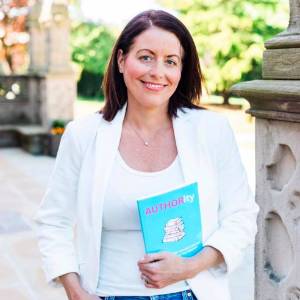
If you'd like to go a bit deeper, this is the test I share in my book, AUTHORity. Work through each question honestly.
- Can you explain it in one or two sentences? If someone asked what your book is about, could you describe it simply and in a way that makes them want to know more?
- Does it reflect a distinctive perspective? Many books explore similar topics. What point of view, pattern or insight makes your approach different? Think about the misconceptions you often correct.
- Does it solve a meaningful problem? Strong concepts help people understand something that has felt confusing, challenging or frustrating.
- Can it support a full book? Could you explore it through several chapters, examples and stories, or is it really a blog post or a lead magnet?
- Does it align with the work you already do? The strongest books are built on ideas you already believe in and talk about through your business, teaching and client work.
If your idea meets these, you're working with something that can become a valuable book. If it still feels a little fuzzy, that's completely normal. Clarity often comes as you keep refining.
How do I write my book idea in one sentence?
Try filling this in:
This book helps [who] to [achieve what] by [how].
For example: this book helps new managers to become confident leaders by providing a practical framework for leading people in their first year in management.
Then read it aloud and check whether someone could immediately understand who it's for, what problem it solves, what transformation it creates, why it matters and why now. If not, keep refining. Clarity is more important than cleverness.
What is the bookshop test?
Imagine your ideal reader picks up your book in a bookshop. They read the title and the description on the back.
What would make them think, "This is exactly what I need"?
If you can answer that, and the answer connects to a problem they're already trying to solve, your idea is doing its job. If you can't, it may be that you need to get clearer on who your book is for before you can judge the idea itself.
What if my idea feels too big or too messy?
That usually isn't a sign that your idea is weak. It's often a sign that you have too many ideas in one place.
A strong business book isn't built around everything you know. It's built around one clear transformation. Try these:
- If my reader could only achieve ONE result from this book, what would it be?
- If they could only learn ONE key lesson, what would it be?
- If they could only remember ONE thing, what would it be?
You don't need to include everything you know. You only need to include what your reader needs.
Where do good book ideas actually come from?
Here's something that surprises a lot of business owners: your book idea probably already exists. It just isn't in the shape of a book yet.
It's in your courses, masterclasses and programmes. It's in your social posts, podcasts and emails. Most of all, it's in the patterns: the questions clients ask again and again, the challenges they bring to you, and the insights you keep coming back to.
So rather than hunting for a brilliant new idea, audit what you already have. What do you find yourself explaining most often? What do people struggle with until you explain it? Your idea isn't something you need to invent. It's something you need to recognise.
What if the real worry isn't the idea?
Sometimes "is my idea good enough?" is really "am I good enough?" in disguise. If that feels familiar, you're not alone, and I've written a whole post on it: what if my book isn't good enough?
Key takeaways
- You don't need a revolutionary idea. You need a relevant one.
- Readers aren't looking for more information. They're looking for clarity.
- A good idea solves a real problem, helps your ideal reader move forward and aligns with what you want to be known for.
- Use the Concept Clarity Test and the "This book helps... to... by..." sentence to check it.
- If your idea feels messy, narrow it to one clear transformation.
- Your best idea is probably already sitting in your client work, your content and your frameworks.
Frequently asked questions
What if there are already books on my topic?
That's a good sign, not a problem. It shows people want help with it. Readers choose books for the author's perspective, not just the topic. Two people can write about the same subject and create completely different books because their concepts are different. Focus on your angle, your experience and the specific reader you serve.
How do I know if my idea is big enough for a whole book?
Ask whether you could explore it through several chapters, each with its own examples, stories and practical guidance. If you can map out a clear journey from where your reader starts to where they finish, it's big enough. If you run out of things to say after a few pages, it might work better as a blog post, guide or chapter.
What if my book idea is too broad?
Narrow it to one clear transformation. Ask what single result you want your reader to achieve, what one lesson they must learn and what one thing they should remember. Then build your book around that. A focused book is easier to write, easier to read and far more memorable than one that tries to cover everything you know.
Should I test my book idea with my audience?
It can really help. Notice which of your posts, emails or talks get the strongest response, and which questions your clients ask most often. You can also share your one-sentence concept with a few ideal clients and see if it makes them think, 'That's exactly what I need.' Their reaction will tell you a lot.
Can AI help me decide if my book idea is good?
Yes, as a thinking partner. LyndseyBot, for example, can take your ideal reader, your transformation and your themes and help you refine your concept. AI is useful for spotting gaps and sharpening your sentence. The final decision should still come from you, because your book needs to reflect your real experience and perspective.
Your idea is probably stronger than you think
Most of the authors I work with at The Easiest Choice Publishing start out unsure about their idea. Once they get clear on their reader and their concept, they realise it was there all along. It just needed shaping.
If you'd like help shaping yours, share your reader, your transformation and your current concept with LyndseyBot™ and ask it to help you refine it. Or, if you'd love expert eyes on your idea, have a look at how we can work together. Progress, not perfection.
Lyndsey x
Lorem ipsum dolor sit amet, consectetur adipiscing elit. Cras sed sapien quam. Sed dapibus est id enim facilisis, at posuere turpis adipiscing. Quisque sit amet dui dui.
Stay connected with news and updates!
Join our mailing list to receive the latest news and updates from our team.
Don't worry, your information will not be shared.
We hate SPAM. We will never sell your information, for any reason.
Meet the author